
The "Good Omens" Effect: The Cosmic Highs and Earthly Lows of Ace Representation
If the only people who don't want sex are aliens, angels, and robots, where does that leave the actual humans who feel the same way?
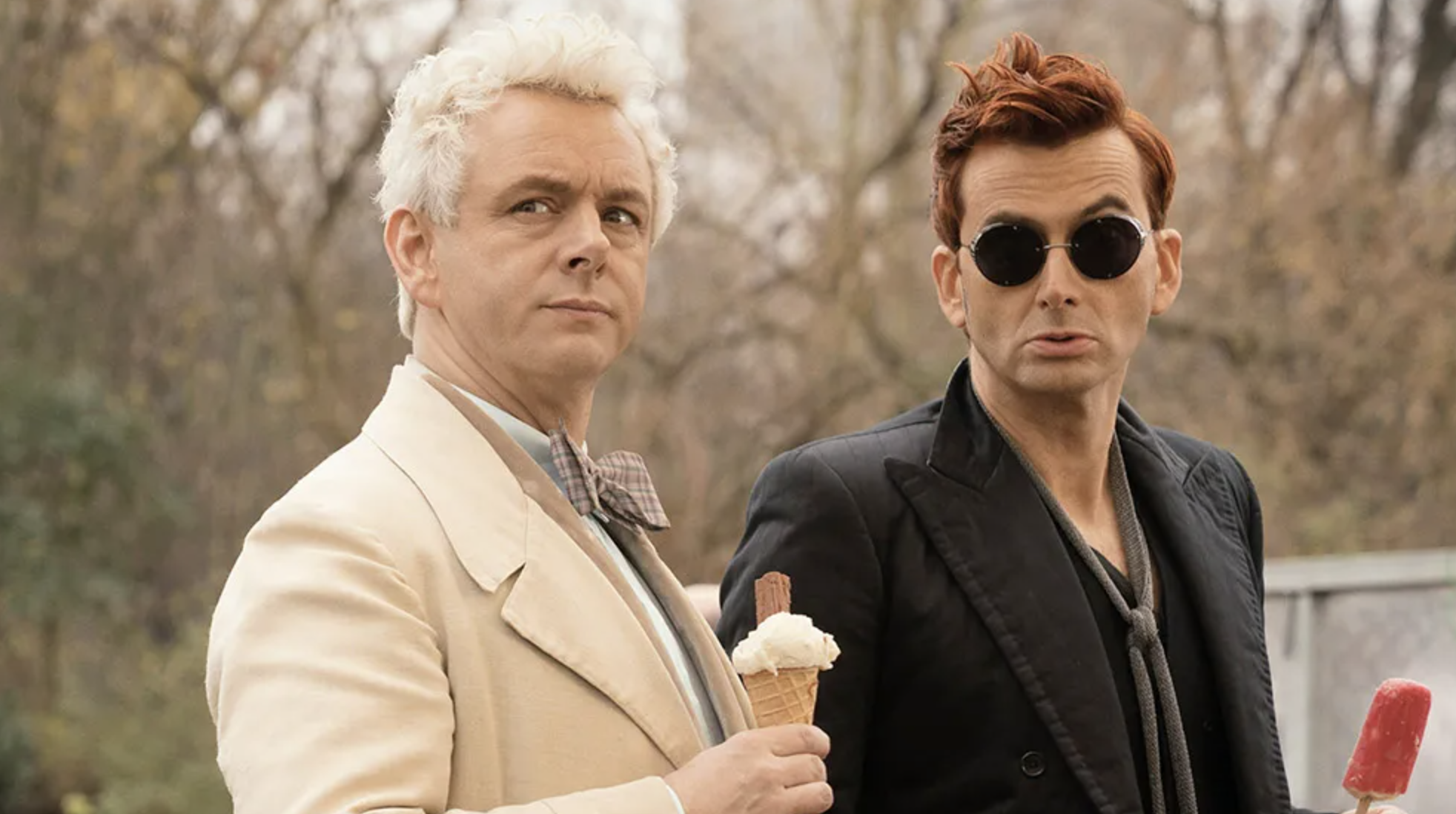
In the hit series Good Omens, an angel and a demon spend six thousand years pining, bickering, and saving the world together. Their bond is undeniably romantic, deeply intimate, and—to the delight of many in the asexual community—distinctly non-sexual. This is the "Good Omens" Effect: the tendency for media to place asexual-coded representation within the bodies of beings who are fundamentally not human.
While these celestial bodies provide a beautiful canvas for queerplatonic love, they raise a nagging question: If the only people who don't want sex are aliens, angels, and robots, where does that leave the actual humans who feel the same way?
The Narrative Appeal of the "Other"
Writers are often drawn to non-human characters when exploring the asexual spectrum (ace-spec) because these characters function as the ultimate "objective observers." By stripping away human biology, creators can use characters like Aziraphale, Crowley, or Star Trek’s Data to interrogate social norms.
The "Fish Out of Water": To an alien, the human obsession with sex often looks absurd, illogical, or humorous. This allows the audience to view "normal" behavior through a fresh, critical lens.
Freedom from the Physical: When characters are made of stardust or circuits, the narrative is forced to find other ways to signal intimacy. We see "soul-bonding," shared history, and intellectual synergy—forms of love that are often sidelined in human-centric stories in favor of physical chemistry.
The Double-Edged Sword
There is something undeniably validating about seeing a powerful, ancient being share an "ace" experience. For many asexual people, the feeling of being "different" from the rest of the world is a core part of their lived reality. Seeing that reflected in a cool alien or a witty angel can feel like a superpower.
However, this trope carries a significant risk: dehumanization.
When asexuality is exclusively tied to non-humanity, it reinforces two damaging stereotypes:
The Mechanical Ace: The idea that a lack of sexual attraction is synonymous with a lack of emotion or "soul" (the cold robot).
The Divine Ace: The idea that a lack of desire makes one "pure" or "above" humanity (the ethereal angel).
Both tropes suggest that asexuality is something that happens to a character because of their species, rather than a natural variation of human orientation. If a character doesn't have the "parts" or the "programming" for sex, their asexuality isn't a choice or an identity—it’s just a technicality.
Comparing the Stars
The effectiveness of this representation often comes down to the "humanity" written into the non-human character.
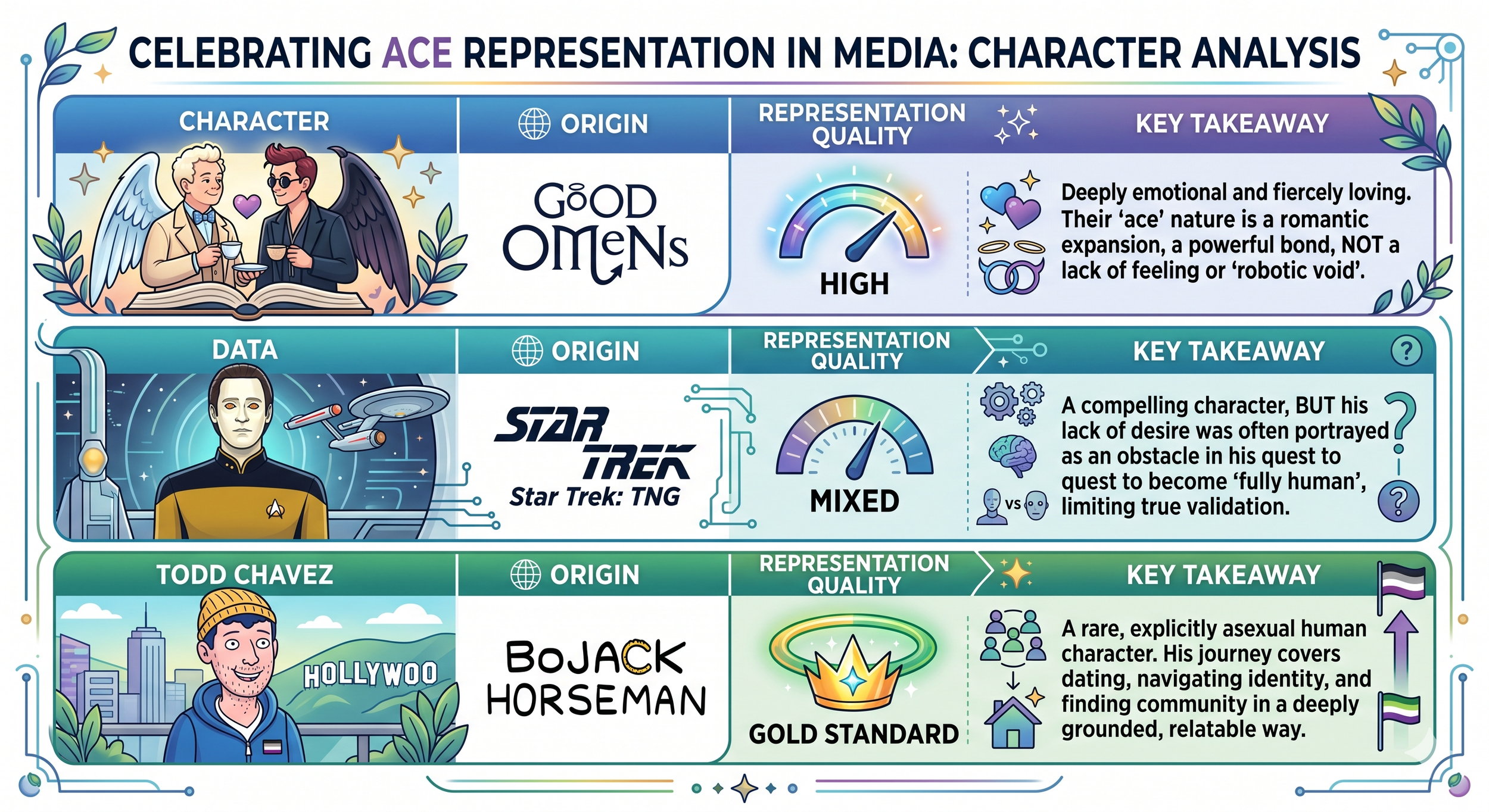
Photo Generated with Gemini
Moving Toward a Mundane Future
The "Good Omens" Effect isn't inherently bad. In fact, Aziraphale and Crowley have done more to popularize the concept of "romantic asexuality" than almost any other characters in modern memory. The problem isn't the presence of celestial aces; it’s the absence of earthly ones.
To truly bridge the gap, we need more "mundane" representation. We need characters who go to the grocery store, pay taxes, and have human DNA, but who also happen to be on the asexual spectrum. When we see a human character like Isaac Henderson in Heartstopper navigate his identity, it provides a vital counter-narrative to the idea that you need wings or a motherboard to be ace.
The Verdict
We can keep our angels and our aliens—they provide the magic and the metaphor that makes storytelling great. But for asexuality to be fully understood as a valid human identity, it needs to be brought down to Earth. After all, you shouldn't have to be supernatural to have your way of loving recognized as "real."