The Ace Flag
A Short History of the “Original” Ace Flag & the Universal Ace Flag
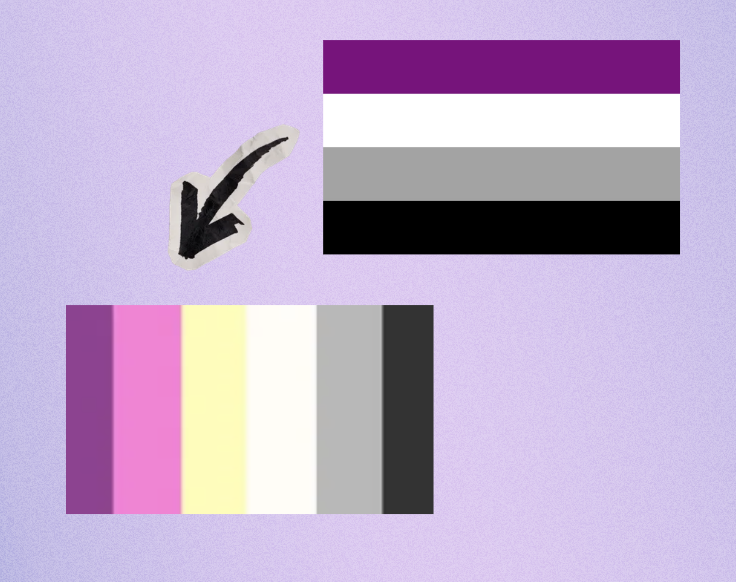
This year, Ashabi, AKA Ace in Grace on Instagram, introduced the Universal Asexual Flag. To celebrate, we took a look at the history of the original ace flag and the Universal Asexual Flag.
History of the “Original” Ace Flag
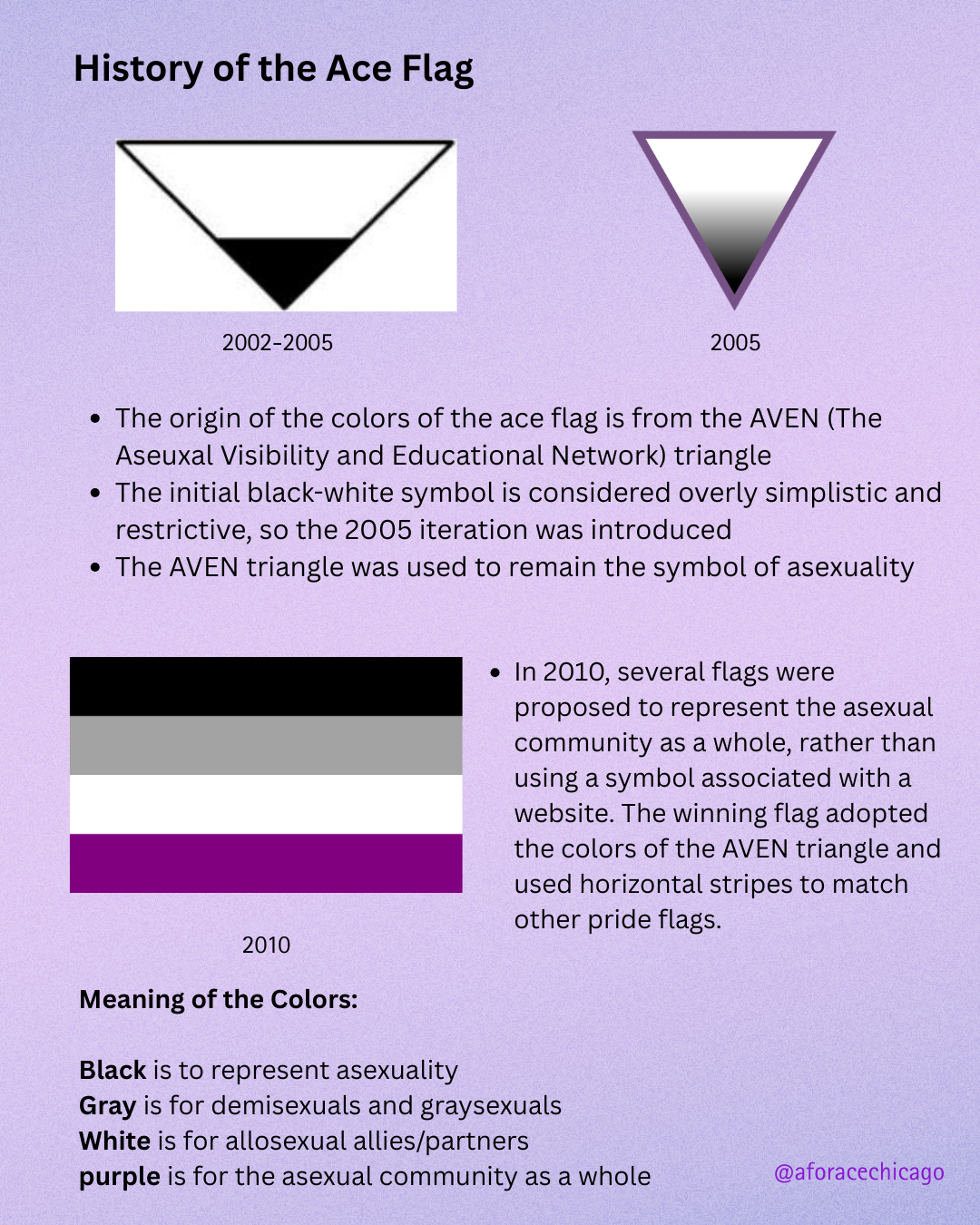
The colors of the ace flag are derived from the AVEN (The Asexual Visibility and Education Network) triangle. The initial black-white symbol is considered overly simplistic and restrictive, so the 2005 iteration was introduced. The AVEN triangle was used to remain the symbol of asexuality.
In 2010, several flags were proposed to represent the asexual community as a whole, rather than using a symbol associated with a website. The winning flag adopted the colors of the AVEN triangle and used horizontal stripes to match other pride flags.
Meaning of the Colors:
Black is to represent asexuality
Gray is for demisexuals and graysexuals
White is for allosexual allies/partners
Purple is for the asexual community as a whole
The Universal Ace Flag
The Universal Ace Flag was designed by Ashabi, aka Ace in Grace. It was launched on International Asexuality Day (April 26th) of 2026. The redesign aims to embrace a more nuanced and comprehensive experience of asexuality (the “universal”), highlight non-other-centered love within the asexual community, and acknowledge that asexual experiences vary from person to person. The design aims to represent sub-communities and experiences other than ace, demi and gray in the original flag, as well as not representing “straight allies” like other queer flags.
The redesign process was a communal discussion, with Ashabi taking advice from different platforms and updating the design. For example, community feedback led to:
Reducing 7 colors to 6 for easier reproduction of the flag
Combining the violet and dark fuchsia/purple lines for visual ease
Brightening the colors so the cream/white and pastel yellow stand out more.
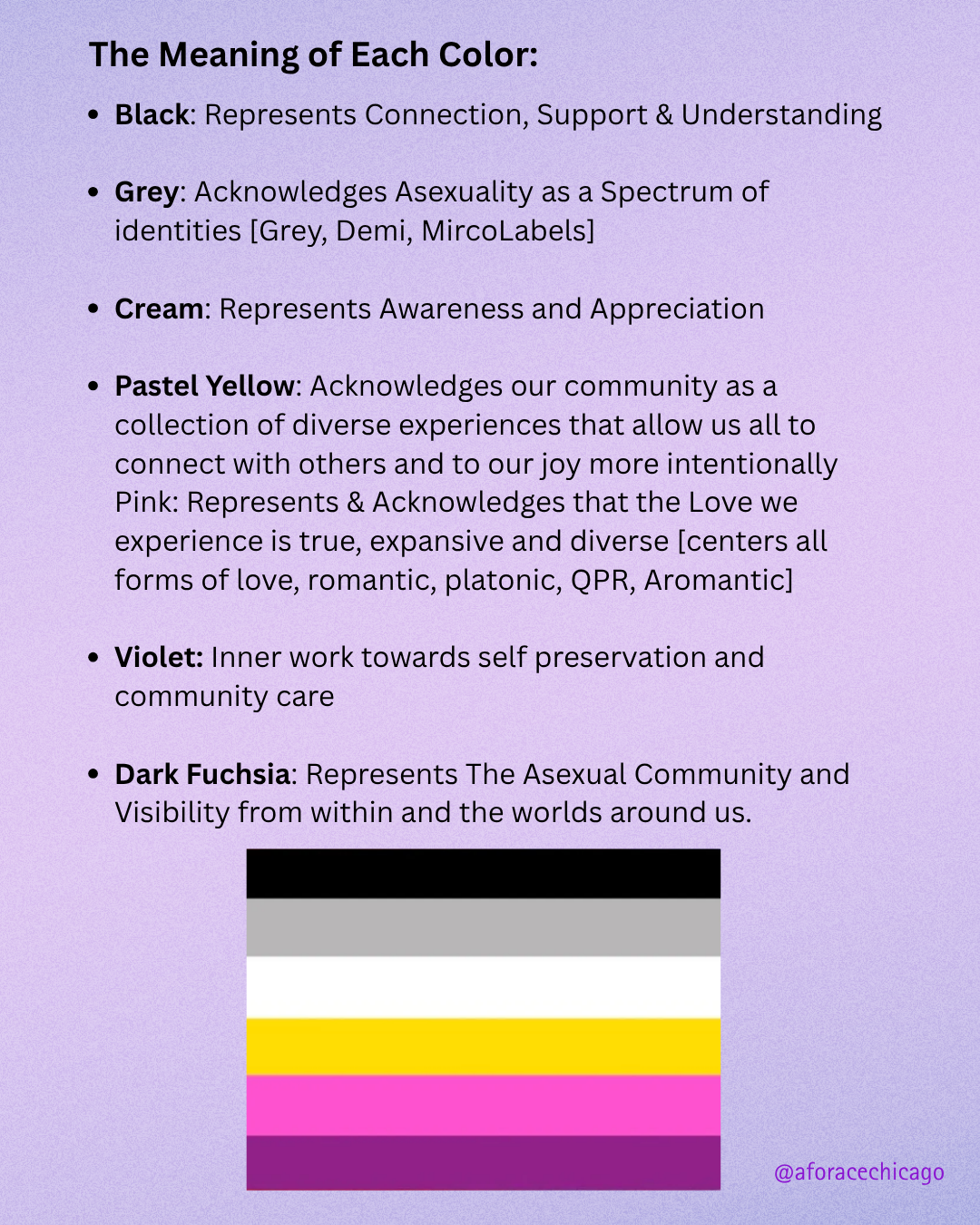
The Meaning of Each Color:
Black: Represents connection, support & understanding
Grey: Acknowledges asexuality as a spectrum of identities (grey, demi and other microlabels)
Cream: Represents awareness and appreciation
Pastel Yellow: Acknowledges our community as a collection of diverse experiences that allow us all to connect with others and to our joy more intentionally
Pink: Represents & Acknowledges that the love we experience is true, expansive and diverse (centers all forms of love, romantic, platonic, QPR, aromantic)
Violet: Inner work towards self-preservation and community care
Dark Fuchsia: Represents the asexual community and visibility, both from within and in the worlds around us.
Responses to the New Design
The “redesign” of the ace flag has triggered community-wide discussion and even some debate. Some point out that it does not seem wise to change the flag while the community is still just becoming more recognized, or simply change it because someone in the community finds the flag “boring”/ “not beautiful”. The reaction to the original ace flag being “alienating” might actually be feeding into the stereotype of asexuality, and changing into “more” and “more vibrant colors” might be forcing asexuality into the dominant queer aesthetic and representation.
But it is important to recognize that the new flag does aim to represent more inclusive and nuanced asexual experiences, and it is not meant to replace the original flag. It is meant as an addition to acknowledge more comprehensive asexual experiences. The naming of the flag as “official new universal ace flag” brings out some confusion, but it actually tries to convey the idea that the redesign is finished (“official”), is an additional design other than the original one (“new”), and that it seeks to represent the “universal” experience.
Despite the debates, the redesign process and conversations show that the community cares deeply about comprehensive and accurate representation and is continually making adaptations to ensure everyone feels safe and seen. The communal discussions, effort and awareness are what make the community and its representation more inclusive.