
Why Pride Month Can Feel Alienating for Asexual People—and How to Fix It
True inclusivity requires us to acknowledge the ace community's unique hurdles and intentionally adapt our spaces to be welcoming to every shade of the rainbow.
Imagine walking into a massive, colorful celebration meant for you, only to realize the language, the imagery, and the atmosphere feel like they require a passport you don’t own.
For many people on the asexual spectrum, June brings a complicated mix of celebration and isolation. Pride Month is a beautiful, vital monument to liberation, historically rooted in reclaiming bodily autonomy and sexual freedom. But because mainstream Pride often equates liberation with the hyper-visibility of sexual expression, asexual individuals—who experience little to no sexual attraction—can find themselves sidelined in the very spaces built to shelter them.
True inclusivity requires us to acknowledge the ace community's unique hurdles and intentionally adapt our spaces to be welcoming to every shade of the rainbow.
The Root of the Alienation: Sex-Positivity vs. Sex-Essentialism
To understand why Pride can feel exclusive to asexual (or "ace") individuals, we have to look at the difference between being sex-positive and being sex-essentialist.
Sex-positivity is the belief that all consensual sexual expression is healthy and should be liberated from shame.
Sex-essentialism, however, is the societal assumption that sex is a fundamental, mandatory component of a happy, healthy human life.
Over the decades, fighting for queer rights meant fighting for the right to love and have sex with whomever you want. It was a necessary rebellion against a puritanical society. However, this historic focus has caused mainstream queer culture to lean heavily into sex-essentialism.
For an asexual person, the fight isn't for the right to have sex; it’s for the right not to want it, without being labeled broken, cold, or diseased. When Pride events lean entirely into hyper-sexualized themes, marketing, and jokes, they accidentally reinforce the idea that to be authentically queer, you must be inherently sexual.
This alienation is further compounded by the exhausting annual gatekeeping discourse. Every June, the ace community faces online and real-world debates questioning whether "the 'A' stands for Ally or Asexual," or worse, telling ace people they "aren't queer enough" because they don't face the exact same flavor of discrimination as allosexual (non-asexual) queer people.
The Invisible Psychological Toll
This lack of nuance leaves a profound impact on the community. Many ace individuals report a distinct "pressure to perform" at Pride—feeling as though they must dress a certain way or adopt a hyper-flirtatious persona just to fit the baseline aesthetic of the festival.
There is a unique loneliness that comes from standing in a crowd of thousands of LGBTQ+ peers and still feeling invisible. When your identity isn’t represented on main stages, mentioned by hosts, or included in corporate Pride merchandise, the message is loud and clear: We forgot you were here.
For ace people of color or disabled individuals, this isolation is multiplied. Society already hyper-sexualizes certain racial minorities while entirely de-sexualizing disabled bodies. Navigating these overlapping layers of systemic bias while trying to claim space as an asexual person can make attending mainstream Pride feel more exhausting than empowering.
How to Fix It: Actionable Advice for Pride Organizers
Fixing this isn't about censoring Pride or sanitizing spaces that have historically been liberating for the leather, kink, and allosexual queer communities. It’s about coexistence. Organizers can make simple, structural changes to ensure everyone feels seen.
1. Diversify the Programming
Not every Pride event needs to take place at a nightclub or a crowded bar. Organizers should introduce daytime, sober, and low-sensory events. Community picnics, panel discussions, art galleries, and ace-specific mixers allow community members to connect without the pressure of a high-sexualized or high-stimulus environment.
2. Mindful Marketing and Signage
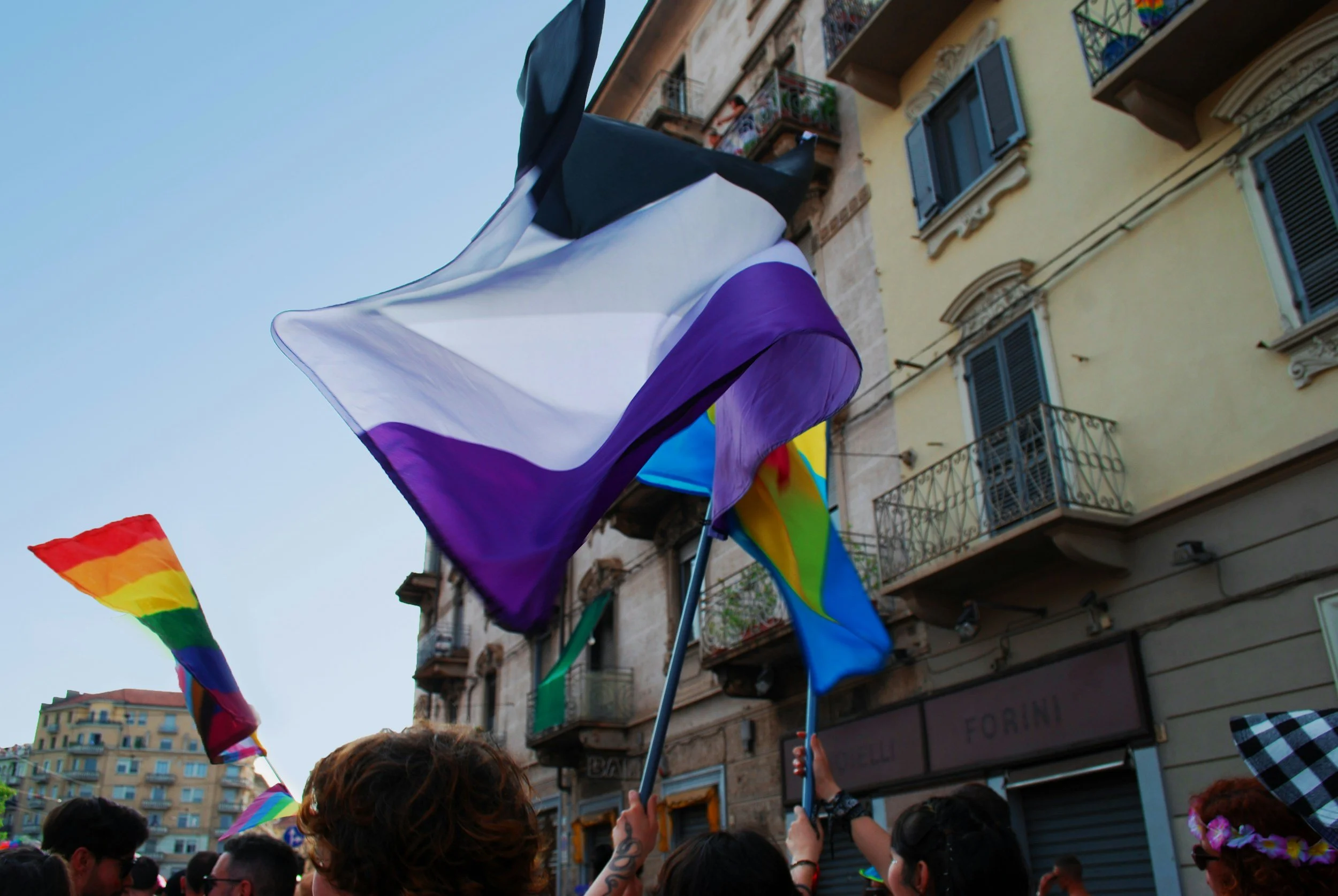
Inclusivity starts with the promotional rollout. Explicitly include the asexual flag (black, gray, white, and purple bars) in festival graphics, banners, and merch. Furthermore, ensure that asexual advocates, authors, and creators are given speaking roles on panels and main stages.
3. Create De-escalation and Quiet Spaces
Large festivals are a sensory overload. Providing dedicated, quiet "chill-out zones" or tents gives introverted, neurodivergent, or ace individuals a place to recharge away from the loud music and intense crowds.
4. Train Volunteers and Staff
Include brief asexuality sensitivity training for festival staff and volunteers. It ensures that gatekeeping language is left at the door and that volunteers avoid making assumptions about attendees' dating or sex lives.
How Allies and Peers Can Help
You don't have to be a festival organizer to make Pride more inclusive. Allosexual peers can shift the culture from the ground up:
Validate, Don't Question: If someone comes out to you as asexual at a Pride event, skip the invasive questions about their libido, their medical history, or their past relationships. A simple, "Happy Pride, I'm glad you're here!" is perfect.
Shift the Language: Notice the phrases you use. Instead of saying "Pride is about celebrating who you love," try widening the lens: "Pride is about celebrating who you are and how you connect."
Amplify Ace Creators: Use your platform to share art, literature, and educational content created by asexual advocates during June, ensuring their voices aren't drowned out by massive corporate campaigns.
True Liberation Leaves No One Behind
True queer liberation isn't a pie; giving more visibility to asexual people doesn't diminish the hard-won sexual liberation of others. In fact, broadening the scope of Pride only strengthens the movement. It proves that the LGBTQ+ community truly stands for bodily autonomy—whether that autonomy means loving fiercely, structurally defying norms, or choosing not to participate in sexual culture at all.
To the ace community heading out into June: You belong at Pride. Bring your flags, your black rings, your inside jokes about garlic bread and dragons, and take up the space you deserve.