

Who Gets to Represent Aces in Pride?
The representation of asexuality in Pride month and beyond is not to judge or police who “gets to be” Ace.
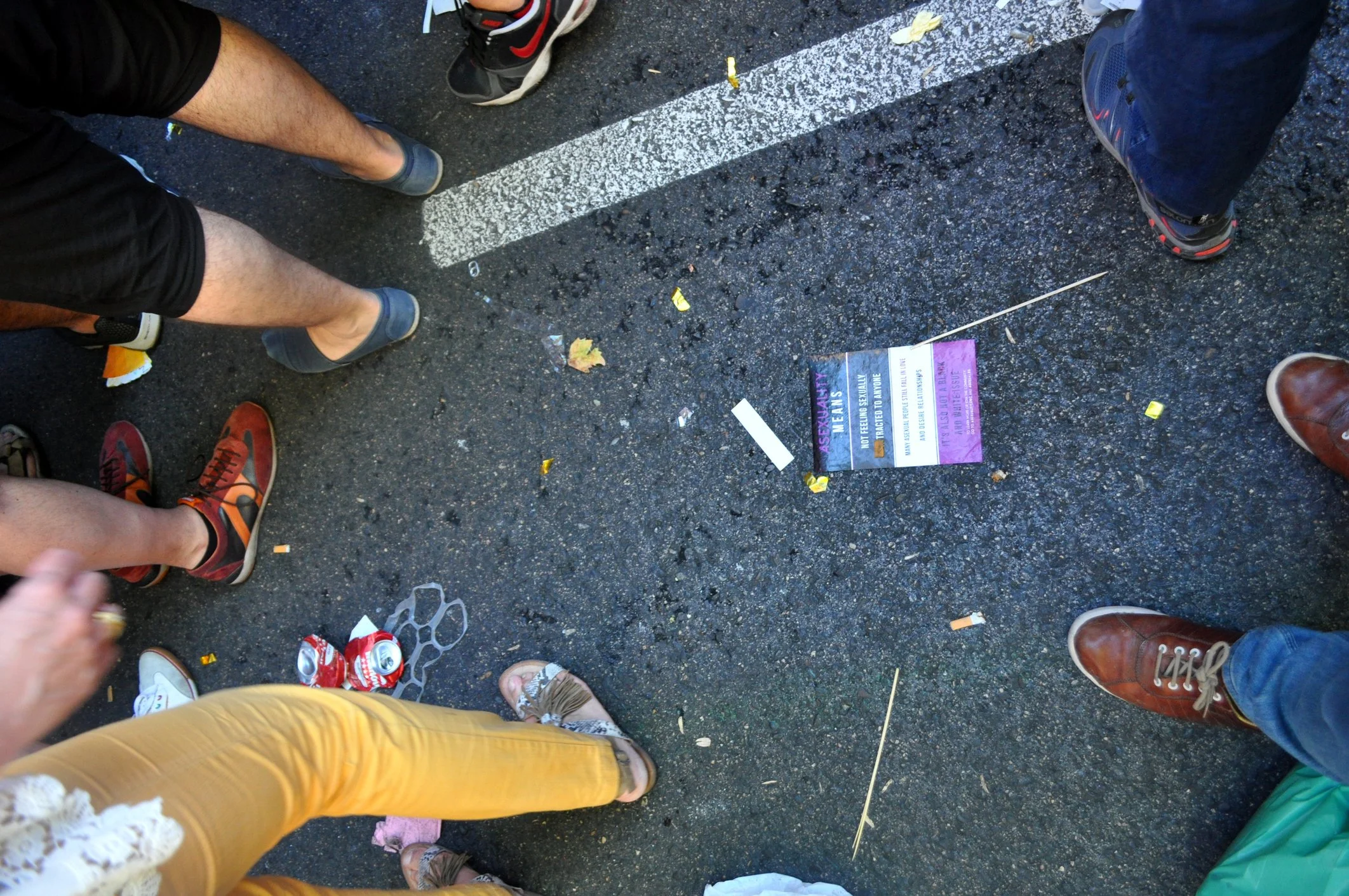
By Hanxue Jiang
The representation of asexuality in Pride month and beyond is not to judge or police who “gets to be” Ace, but to raise awareness and create an inclusive space for all kinds of asexual experiences and a-spec identities.
Mainstream portrayals of Pride inevitably oversimplify each queer community into images with archetypal styles and personalities for circulation and memorability. The queer communities might be characterized as always flamboyant, expressive and sex-positive, and queer individuals may need to fit in these expected images. The asexual community, similarly, tends to be perceived as certain types of people – those who do not know the ace spectrum and culture well enough might regard ace individuals as always sexually restricted and detached from all kinds of intimacy. Ace flags flying in Pride might be automatically associated with these rather negative impressions and myths, or seen simply as “the other kind of people” than allosexual queers and setting up the wrong kind of divide.
Though it is useful to establish a base image of asexuality that people could identify with and stand by in queer-celebration events like Pride, it is also important to raise awareness that the representation of asexuality is not to gatekeep who is “truly” ace, or create a rigid category that people need to fit themselves into. The identity of asexuality – individuals who experience no to little sexual attraction (and could be under distinctive circumstances) – matters, and the actual experience of being an ace person with all kinds of social relations also matters, and needs to be respected and recognized as well.
The common “criterion” for being asexual is that one needs to not engage in sexual activities at all. But this could reinforce the myth that all aces need to be sexually repulsed, or set up barriers for who gets to represent ace in Pride and the overall queer world. It creates pressure to “prove” oneself as “really ace,” or to start policing from outsiders or even within the ace community to judge who is “not ace enough.”
However, asexuality in fact is about attraction, not action. An asexual individual could be engaged in sexual activities for various reasons, just as a homo/bi/pansexual person might be involved in heterosexual sex/relation for whatever reasons.
An ace person might engage in sex to express their affection to their allosexual partner; this could be like watching a film your loved one likes, but you probably would not watch on your own.
An ace person could also have sex for pleasure, curiosity, reproduction, and other reasons. It is true that some ace individuals are sex-repulsed, but there are also others who are indifferent to sex, are okay with having sex with the person they love, and those who enjoy the physical pleasure of sex acts themselves without the need to feel sexual attraction prior to it. Recognizing all these unique experiences of asexuality without judgment allows people not to need to “qualify” for the identity they want to identify with, and not to be ashamed or question whether they are “wrong” about who they are if they ever engage in sex. It also gives people the option to express intimacy in a more traditional way (i.e., sexual activities) in the dominant allosexual culture, especially when their partners are allosexual (and yes, asexual people can be romantically involved with non-asexual people).
This recognition offers more agency to ace individuals as well, for they can center their identity around how they feel, and not solely on how they choose/still have to act in a culture that they are marginalized in and how others might judge them for their actions.
The diverse experiences of the ace community show that being “ace” (and “queer”) is not about fitting into a coherent, archetypal image, but about actually seeing all kinds of experiences and choices and respecting them.
This also shows that Pride is not only about increasing visibility through memorable and popular representations, but also about raising awareness of the nuances of distinctive queer lives and identities, and about how to create safe spaces for people with different experiences. Allies and non-ace/non-queer people get to learn that the ace and queer communities are actual people with complex stories, and not simply “this” or “that kind” of people who feel distant and have stereotypical characteristics.
So, who gets to represent the Ace community in Pride, and in life? The answer could well be that there is no “the” image of the Ace person and the Ace life. After all, asexuality is an umbrella term that embraces a wide variety of ace-spec identities and validates all kinds of lived ace experiences and self-identification.
Creating ace community and raising awareness about asexuality is about creating spaces for those who do not feel stratified and belonging to traditional allosexual spaces, and offering a sense of safety and openness to whoever needs them; it is never to set up standards to gatekeep these spaces or tell certain people who want to stay that they have to leave.
You can be ace and not give a thought to sex at all, or you can be ace and still sometimes practice safe and meaningful sex with your partner. To be ace and to celebrate asexuality in Pride and at any time is not to “represent” a certain “type”, but to actually live that life and be(come) who you truly are.